
ENTER YOUR EMAIL TO RECEIVE OUR WEEKLY NEWSLETTER
Composing Term Papers and Poems on a Royal Quiet Deluxe
The tale of a manual typewriter that did double duty at the author’s childhood Queens home and at her mother’s Manhattan office
By Susan Shafer
August 28, 2026
. . . . . . . . . . . . .
Part 3 in our Typewriter Reveries Series
. . . . . . . . . . . . .
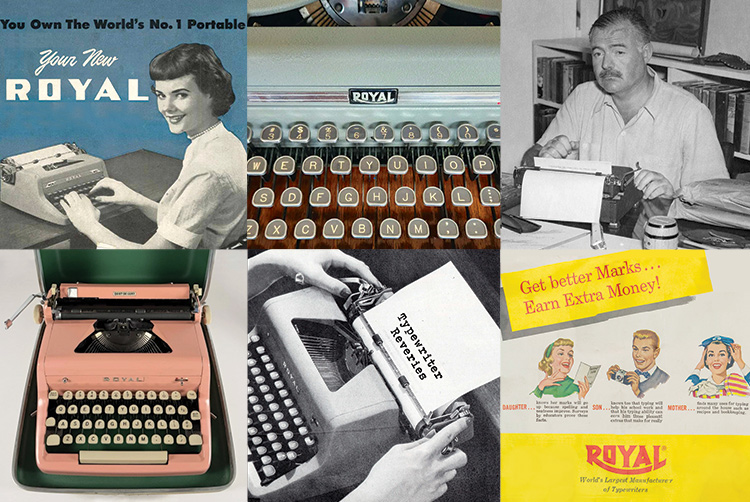
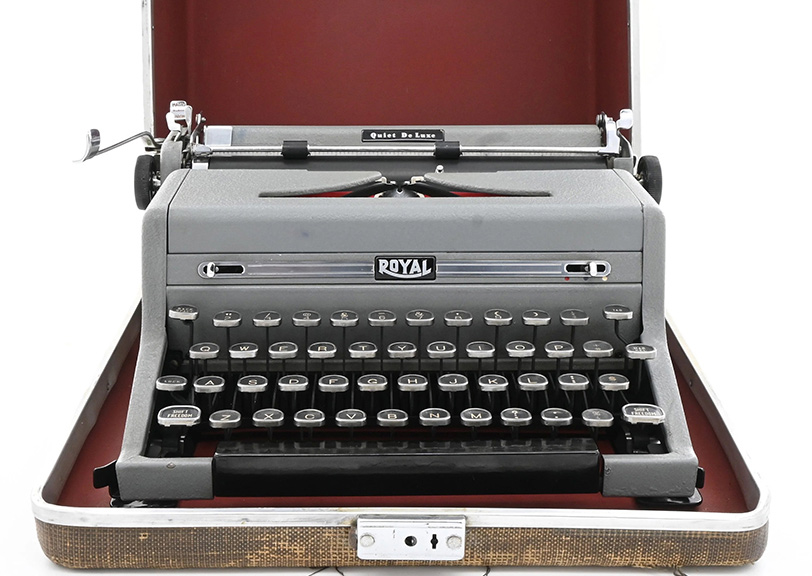
Ever the sly one, my mother was always looking for opportunities to teach new skills to me, her 11-year-old daughter. So she turned to our household Royal Quiet Deluxe (the typewriter of preference for Ernest Hemingway and Ian Fleming) to reinforce my basic vocabulary and introduce proper finger and hand positions—that way, I’d learn to type like a professional.
In the 1940s, Mother had been a secretary in an office that didn’t provide typewriters for its staff. So she obligingly lugged the family’s Royal Quiet Deluxe from our apartment in Ozone Park, Queens, to her workplace in Manhattan. And she brought it back home every evening—that way, it was readily available, after hours, to our family through the 1950s and beyond in Woodhaven, Queens, where we later lived.
To familiarize me with the keyboard, my mom started with the topmost horizontal letters (beginning with Q on the far left of the keyboard). She had me find as many three- or four-letter words as I could. Then I practiced typing each word multiple times, as in top, top, top, or wit, wit, wit, and wit, until I got comfortable with the hand motion and with finding the letters quickly. When that became routine, I’d move on to the horizontal row below (gal, gal, gal) and so on—until I eventually knew the entire keyboard and became a proficient typist. That took many weeks of practice.
As for the typewriter itself, I remember the two thin metal prongs that held up the two sheets of paper in progress, so I could refer back to the text I’d already typed. What’s more, changing the typewriter ribbon caused ink to smear on my fingers. Not to mention the carbon paper—which I sometimes inserted backwards (and which meant having to retype the entire page). And let’s not forget the charming bell, which clanged when I reached the end of a line; and the small strip of correction tape that I placed within easy reach on the table, ready to undo the occasional typo.
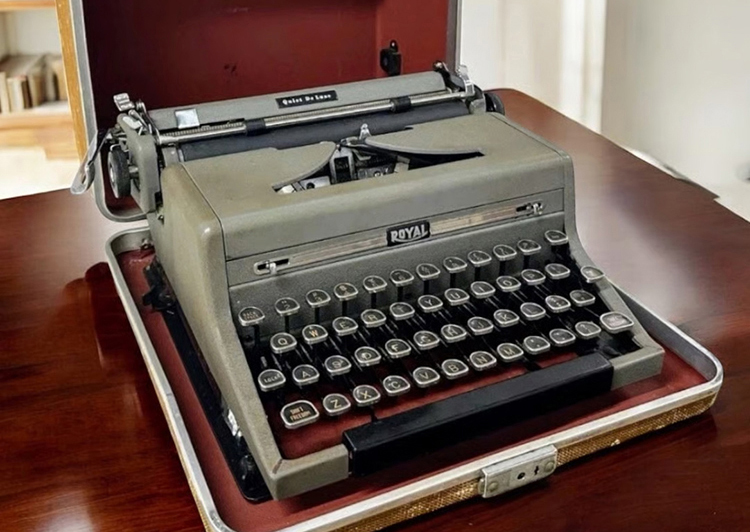
The other day, I let out a yelp when I noticed a similar vintage Royal machine on Etsy—described as a “galvanized gray metal typewriter with a case that measures 13.5 x13 x7.5 inches”. That hardly captures the importance my Royal typewriter had for me when I typed my poetry and, much later, my term papers, so many industrious years ago.
Susan Shafer, a former teacher and children’s book editor, is now a playwright and freelance writer.
You may enjoy other NYCitywoman articles by Susan Shafer:

Composing Term Papers and Poems on a Royal Quiet Deluxe

A (Very Timely) Haydn Appreciation
Remembrances of a Smith Corona, a Royal Standard, and an IBM Selectric
Working with Avant-Garde Composer Luciano Berio, 1965–1968
The Life, Times, and Torments of My Smith Corona

Whither the Kennedy Center?

The “What’s Happening” Kid

Cognitive Decline After a High-Pressure Career
Neil Diamond Plays Fort Gordon!

Our 2026 Fundraising Request