
ENTER YOUR EMAIL TO RECEIVE OUR WEEKLY NEWSLETTER
Remembrances of a Smith Corona, a Royal Standard, and an IBM Selectric
A writer offers admiration, respect—and maybe even awe—for the “beauty and elegance” of the typewriters in his life
. . . . . . . . . . . . .
Part 2 in our Typewriter Reveries Series
. . . . . . . . . . . . .
July 13, 2026
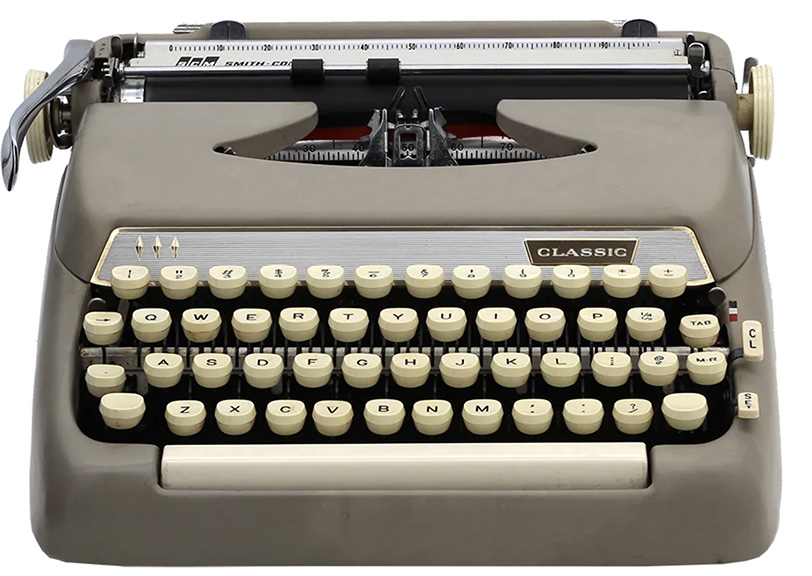
Through high school and college, I used a Smith Corona Portable to write papers—but I never loved it. I am a hunt-and-peck typist, and I always found the typing hammers too flimsy and close together; they tended to jam in the middle cavity of the typewriter like a weird metal bouquet.
But one day a few years after I graduated from college, my father changed all the typewriters in his office, and I brought home an outdated Royal Standard. Now that was a machine! It must have weighed a good 15 pounds, and it stood on my desk like a not-so-miniature piano! I sat proudly before it, playing it, or more likely driving it, for it also felt like it had its own will and self-propulsion, and had only to be guided and even restrained when it got too frisky.
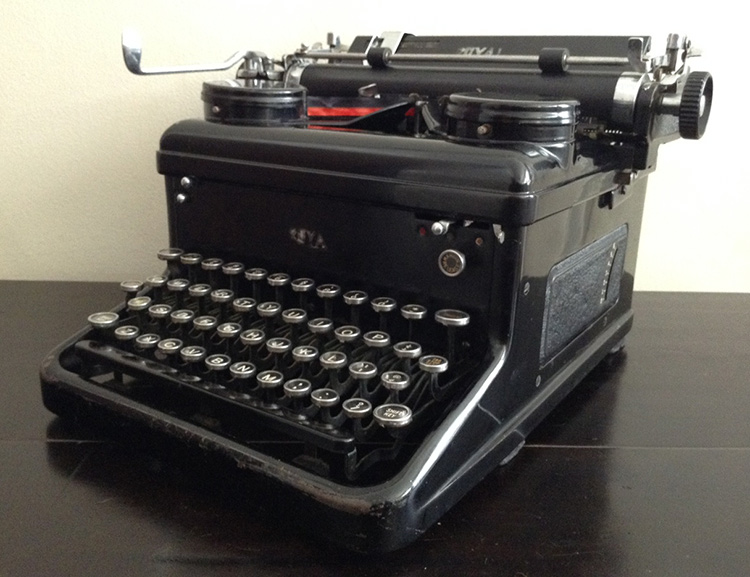
A Royal Standard in repose. Photo from myoldtypewriter.com.
I can’t say that my typing improved or that I didn’t continue to get those logjams in the well of the machine, or that after hours of typing my fingers weren’t stained with ink from prying apart the metal fingers. But I had the same feeling that I have after driving a car or attempting to play a guitar or saxophone—a sense of having engaged with a technical achievement deserving not only of respect, but of admiration for its beauty and elegance.
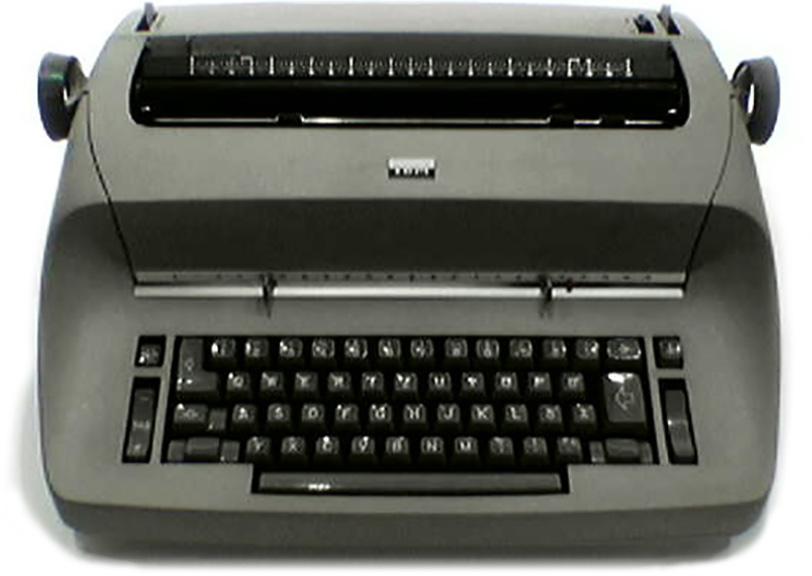
Decades later, I felt the same way about the two IBM Selectrics that I owned. I still have the second one. It sits on my file cabinet, claiming space that I could use for something else. But I can’t throw it away. It is too beautiful. Like the Gokstad Ship in Oslo’s Viking Ship Museum, it represents a plateau in human technology, where beauty and efficiency were for a moment perfectly merged.
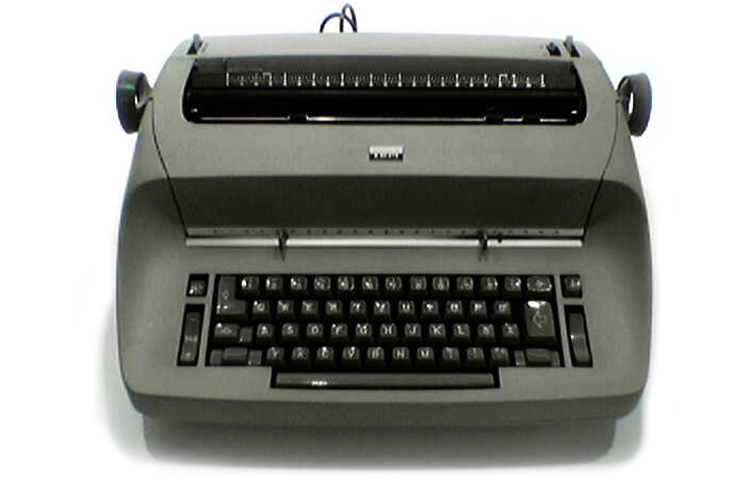
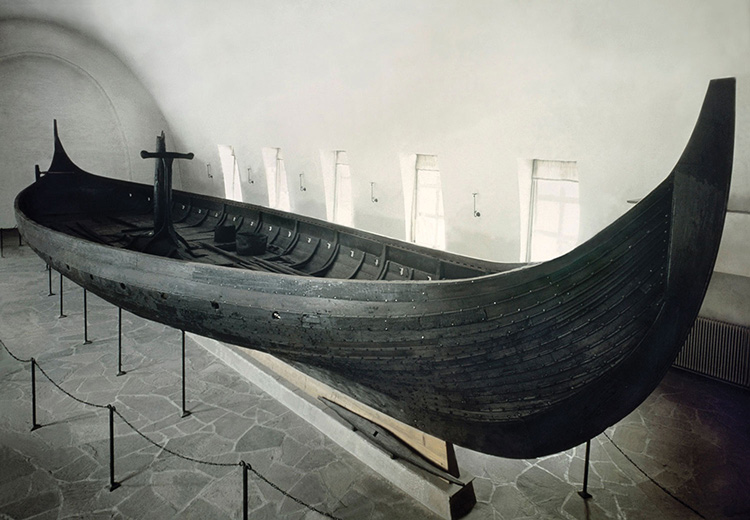
Two “plateaus of human technology”: an IBM Selectric and the Gokstad Viking Ship. Photo from archaelogy.org.
Now all my typewriters are lost to disuse or oblivion. But I realize that something else went missing in the transition from typewriters to computers: the hand as editor. In retyping manuscripts, my fingers would tell me when I was repeating a word I’d used a few lines earlier. I’d have to stop and think of a better word, or consult Roget’s, or—even better—rephrase the entire sentence or paragraph. Now my eyes have to do the editing, and they are bleary, lazy, not nearly as discerning as my fingers. Since the arrival of computers, writing—can we still call it that?—has become flaccid, prolix, full of misspellings and word misuse. Elegance, taste, and human judgment have morphed into something that we think of as efficiency, but is in fact the opposite: machines spewing out endless reams of colorless, forgettable copy.
Let us also not overlook the sexy sound of good typing. Composers were aware of it, and worked it into musical comedies whose names I’ve forgotten but have vivid memories of stage desks with long-legged chorus girls pretending to type in rhythm. What’s more, for about a year, I worked in a writers’ room in Midtown Manhattan. We sat in cubbyholes that gave us a little privacy, but the entire room was filled with the clatter of typing. One person in particular typed beautifully. I never knew if it was a man or a woman. But it really was music—long lines with rhythmic pauses, then bursts into crescendos of characters. I stopped my hunting-and-pecking—and just listened. Was it possible to fall in love with someone solely for their typing? Of course it was.
Where is it now, my Royal Standard, proud as a ship, massive as a grand piano? No doubt in some sort of heavenly repair shop, all spiffed up and shiny, just waiting for me to reclaim it!
George Blecher writes for The New York Times and for a number of European publications about American politics and culture. See georgeblecher.com
Continue reading George Blecher on NYCitywoman.com:
Edible Memories: At Le Café Arnold, Chicken Flambé and V8 juice

Composing Term Papers and Poems on a Royal Quiet Deluxe
A (Very Timely) Haydn Appreciation
Remembrances of a Smith Corona, a Royal Standard, and an IBM Selectric
Working with Avant-Garde Composer Luciano Berio, 1965–1968
The Life, Times, and Torments of My Smith Corona
Whither the Kennedy Center?

The “What’s Happening” Kid

Cognitive Decline After a High-Pressure Career
Neil Diamond Plays Fort Gordon!

Our 2026 Fundraising Request