
ENTER YOUR EMAIL TO RECEIVE OUR WEEKLY NEWSLETTER
Neil Diamond Plays Fort Gordon!
The author, as a budding young opera director and U.S. Army Specialist 4th Class, sets up a free concert for the best-selling pop star Neil Diamond during the Vietnam War—and creates a true military snafu
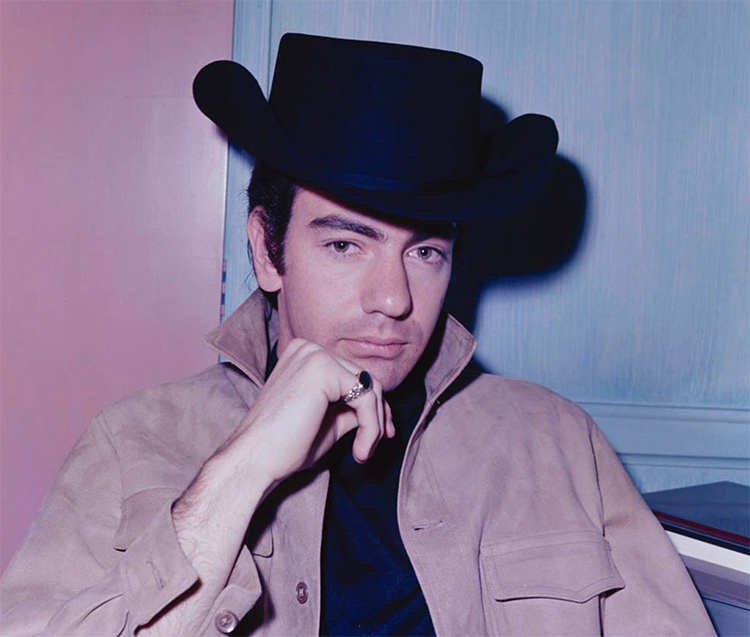
Neil Diamond, 1967 (Facebook)
. . . . . . . . . . . . .
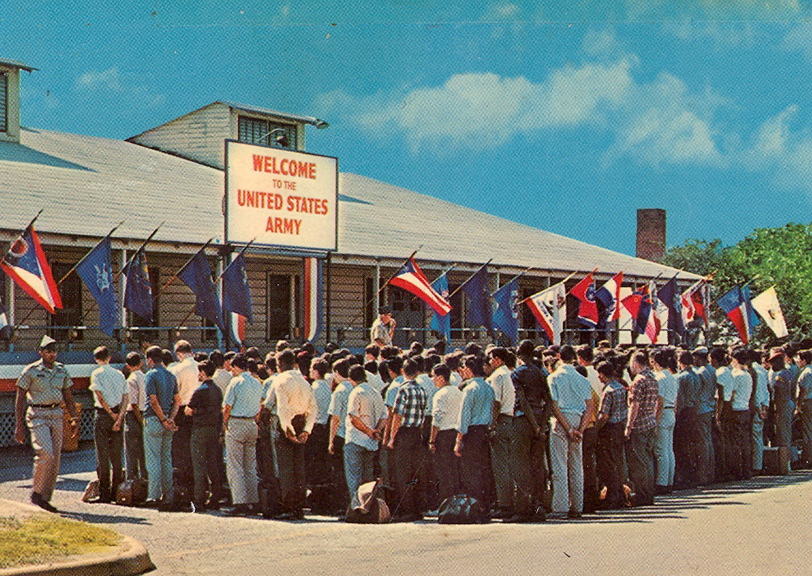
My Vietnam War, 1966–1968 Article No. 2 in a series
. . . . . . . . . . . . .
January 20, 2026
In the fall of 1966, not long after I began working in the U.S. Army Special Services unit, my commanding officer, Major Pipkin, had exciting news.
“Strasfogel,” he exclaimed, “Neil Diamond is taking basic training right here at Fort Gordon, and he’ll give a free show for the troops.”
“Who’s Neil Diamond?” I knew Elisabeth Schwarzkopf and Eleanor Steber and other stars of the operatic firmament, but I was clueless about pop singers. (I still am.)
Major Pipkin was incredulous.
“Neil Diamond’s a giant young star—like Elvis.”
He shot me a glance.
“You do know who is Elvis is, right?”
I laughed and nodded.
“Well, just like him, Neil got drafted, and he’s in his last week of basic.”
Once again, I found him studying me as if I were an extraterrestrial.
“I can’t believe you never heard of this guy. His songs are giant hits: ‘Cherry, Cherry,’ ‘Solitary Man,’ ‘I’m a Believer.’ ”
“I think I actually know that last one.” It had been blaring night and day in the barracks.
“Isn’t it amazing? It’s the Monkees’ greatest hit.”
I hadn’t the foggiest notion who the Monkees were, but nodded knowingly.
“In any case, the kid’s coming here after training today to arrange the details. The CO wants us to schedule the show next Thursday at 1900 hours. I’ll lay on the Showmobile.”
That would be a first. The Showmobile, a large bus that converted into a shallow stage, had languished in its garage the whole time I’d been there.
A few hours later, as the sun started to set, young Neil Diamond, pale and worn out from training, arrived with another draftee in tow.
After shaking hands, I asked the obvious question: “Who’s your friend?”
“This is my buddy, Sam. He looks after me.”
Interesting. A star has his entourage even in the Army. I asked Sam if he and Neil were in the same barracks.
“Of course,” he replied. “He’s my main man.”
“I see,” I said. “But did you know each other before?”
“So,” said Sam, changing gears, “tell me about the instruments.”
“Sorry?”
“The instruments. What’s Neil gonna play?”
“Well, we’ve got a nice guitar and—”
Sam interrupted mid-sentence: “Electric or acoustic?” The guy was all business.
“Acoustic. I hope that’s all right. How about it, Neil?”
The great star gave what I assumed was a grunt of approval. “There’s also an upright piano, if you like.”
“Nah,” said Sam. “Just give him the guitar. You got a mic?”
“Of course. It isn’t what he’s used to back in New York, but it’s functional.” I found it odd that our resident star hadn’t asked a single question.
“Neil, are you sure you don’t need anything else? Maybe a music stand?”
Sam frowned. “Nah. Neil knows his music perfectly.”
“Did you get the info about date and time?”
Sam pounced again. “Yeah, we got it.”
Neil’s silence fascinated me. The artiste was clearly a man of few words.
“Come here after chow on the day of the show,” I said, “and I’ll walk you over to the site. Any questions?”
“Nah, Specialist, it’s clear.”
I shook Sam’s hand, then turned to Neil and said, “You know, I’m really looking forward to this.” Then, as I bent forward to shake his hand, I noticed his name tag. It read, “Sammartino.”
“What’s that all about?” I asked.
Sam jumped right in. “Neil Diamond’s his stage name. He changed it when he went into show business.”
“But his actual name’s so cool,” I said.
“The fans won’t like it.”
“Don’t they know it?”
“I sure as hell hope not,” said Sam.
“So, which one of you got the idea of calling him Neil Diamond?”
As usual, Neil let Sam do all the talking.
“I’d rather not say; it’s sensitive information. We don’t want it getting in the fan magazines.”
(In those days, long before the advent of the internet and social media, fans of the big pop stars could learn about their idols only from the “news” printed in entertainment monthlies.)
Intrigued by this nugget of inside information, I assured the pair that I’d protect Neil’s true identity, and I sent them on their way.
On the evening of the concert, Sam, Neil, and I met up at Special Services and walked over to the old parade ground where we’d parked the Showmobile. The star’s chair and microphone were the only items on its shallow stage. I asked Neil if he’d like to check the setup. He made an imperious gesture, and Sam clambered up to test it out. In the distance I heard the insistent drone of drill sergeants as they marched their trainees to the performance.
“Okay, guys, time to clear off. Wait in the wings until the CO introduces you.”
Neil headed offstage, while Sam stayed with me. “I got incredible news, Specialist. Neil’s gonna give the troops a special rate to join his fan club.”
I knew Neil Diamond was up-and-coming, but fan clubs were the province of stars like Sinatra or Elvis. “He’s got one?”
“Of course, and it’s great. You get a monthly newsletter with the inside story on all his hit songs and personal photographs that have never been seen before.”
“But these guys are in training. They don’t have time for newsletters.”
“They sure as hell have time for Neil Diamond.”
“But Diamond’s in training, too. How can he possibly—”
“He doesn’t do it. He’s got a staff in New York writing it.”
“A staff?” As is evident, I was a babe in the woods when it came to the lives of pop entertainers.
“But most of the troops will be going to Vietnam. How will they—”
“We got it all worked out. And it’s cheap. Normally, there’s a ten-buck initiation fee and five bucks a month for each newsletter. But Neil’s offering the whole package—twelve monthly issues plus initiation fee—for a total of ten bucks. All I gotta do is make an announcement before Neil sings and then go through the crowd collecting their—”
“Hey, wait; you’re going to collect money?”
“Of course. It’s only ten bucks—an absolute bargain.”
“But you can’t just go around asking for—”
“It’s a fan club. They get photos. They get newsletters. We gotta charge something.”
I finally understood where things were headed. “Sorry, soldier,” I said. “This can’t happen.”
“Why not? It’s a fabulous deal.”
“We can’t ask for money at any of our shows. It’s against regulations.”
“But it’s for his fan club, not the show.”
That did it. I reared up in all my military splendor. “Look here, Private. You can’t ask for money from a group of draftees. Not one fucking cent! Get it?” I pointed to my Spec 5 arm patch. I decisively outranked Sam—and I was two inches taller. “Have I made myself clear, Private? Neil sings for the troops, and that’s it.”
It was the first time I pulled rank on anyone, and it felt really good. As Sam slunk off, I stayed close to our star singer; I didn’t want any more shenanigans.
After a while, Major Pipkin arrived. Clearly in awe, he shook Neil’s hand and promised the great man he’d keep his remarks short.
By now, a crowd of about 600 shaved and exhausted draftees was sitting in neat military formation facing the stage of the Showmobile. Major Pipkin hopped onto it and addressed the assembly. He was truly in his element.
“Troops,” he said, his voice blaring from the Showmobile loudspeakers, “this is a great honor. Neil Diamond, Private Neil Diamond, has volunteered to sing for you. Even though he’s a star, he’s a draftee just like you, and now, patriot that he is, he’ll perform your favorite songs. Take it away, Neil Diamond!”
The crowd whooped as the star strode onstage, brandishing his instrument like a weapon. A brief bow, a swift tuning, and Neil Diamond sang his songs for the troops at Fort Gordon.
So what did one of America’s great entertainers sound like on that autumn evening in 1966, just as the United States escalated its search-and-destroy missions in Vietnam?
As mentioned, I’ve got a blind spot when it comes to pop music. The super-simple tunes and harmonies that enthrall millions slip right past me. I can tell you exactly how Birgit Nilsson sang the “Liebestod” or Franco Corelli “Nessun dorma,” but when it comes to Neil Diamond’s performance that night at Fort Gordon, I draw a total blank.
Sorry.
I do remember, however, that the show barely lasted 30 minutes. Even so, the troops seemed to enjoy it. They didn’t shout or swoon as they often do at such events, but they clapped and sang along with the most famous songs—none of which I knew, of course.
Neil finished his set, took a few quick bows, and slipped off before I could thank him. As I locked up the Showmobile, I saw him scurrying back to his barracks with his unscrupulous manager pal hot on his heels. So much for Neil Diamond.
Or so I thought.
A few months later, on a wintry afternoon, Major Pipkin summoned me into his office.
“Strasfogel,” he said, “you’ll never believe what just happened.”
“Try me, sir. I’m up for anything.”
“Not this….” I waited expectantly; my CO remained pale and pensive.
“May I sit down, sir?”
“Yes, of course…. You’d better.”
I grabbed a chair and faced him across his tidy government-issue desk. A stock photograph of General Richardson, our commanding officer, my guardian angel, stared straight at me.
“Remember that concert Neil Diamond gave last fall?” he asked. “I thought it went pretty well. Didn’t you?”
“As you know, I’m not the man to ask, but the troops seemed to enjoy it.”
“They loved it. So did I. I decided to thank Neil’s mother personally for raising such a fine young man.”
“That’s very thoughtful of you, sir.”
“It took a while for the Pentagon to track her down. Once I had her address, I sent her a full-blown letter of commendation, totally official, signed by myself and General Richardson. Just now, she wrote back, thanking me for the letter … but said her son had never been drafted.”
“What?!”
“You heard me. Neil Diamond’s married with two young kids. He’s draft-exempt.”
“Holy shit….” I slumped back in my chair.
“It makes no fucking sense. Why would anyone do such a thing?”
“To make a quick buck.” I told the major about Sam’s attempt to hustle the crowd.
“You did the right thing, Strasfogel. You nipped it in the bud.”
“Thank you, sir. I couldn’t let them get away with it.”
“But they did get away with it!” Major Pipkin slammed his fist hard on the desk. “Those fucking frauds! I’ll bring them up on charges. Give me their goddamn names.”
“Sir, sorry, it’s been four months. I vaguely remember one guy came from an Italian family. Sammartino or something—but I never wrote it down.”
“You didn’t?”
“What for? You told me I was dealing with Neil Diamond. The kid said it was his stage name—it all made perfect sense.”
“For them!” the major said grimly. “They’re untraceable. They got away scot-free. I’ll look like a jackass when General Richardson finds out.”
He fell into a dark silence. I took pity on him and said, “Sir, did you tell anyone else about that letter?”
“No.”
“So we’re the only two people who know.”
“Other than Neil Diamond’s mother,” he said.
“But she won’t talk. Why would she?”
“Oh, I get it,” the major said, the light dawning. “That old Army saying: What the commanding general doesn’t know won’t hurt him.”
“Exactly, sir.”
“Let’s make this our own little secret, Strasfogel. Agreed?”
“Yes, sir, absolutely,” I said and gave him a sharp salute.
Ian Strasfogel is an author, opera director, and impresario who has staged more than 100 productions of opera and music theater in European and American opera houses and music festivals. His comic novel, Operaland, and his biography of his father, Ignace Strasfogel: The Rediscovery of a Musical Wunderkind, were both published in 2021.
Other articles by Ian Strasfogel
A Kerfuffle Over the Andarz Nama, an Ancient Persian Miniature

The “What’s Happening” Kid

Cognitive Decline After a High-Pressure Career
Neil Diamond Plays Fort Gordon!
Our 2026 Fundraising Request
My Vietnam War—Part 1 in a Series
Creating a Life (and a Livelihood) in Italy
The Paul Taylor Dance Company Returns to Lincoln Center
Reviewing the 63rd Annual New York Film Festival

These Days, It’s Women Who are Filing for Divorce

A Kerfuffle Over the Andarz Nama, an Ancient Persian Miniature